Wardogs Season 2 rain turns every raid into a different fight and here is how to survive it
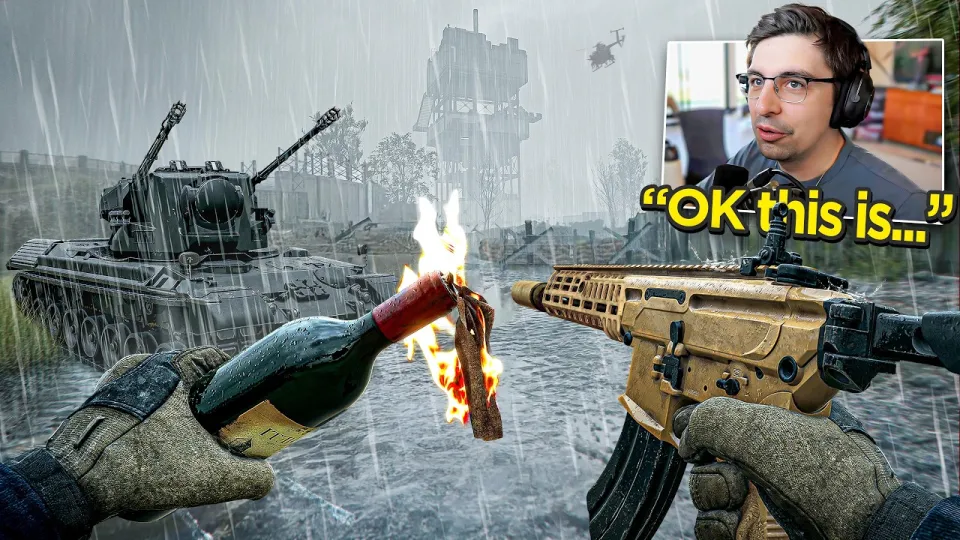
Video: Wardogs Is a Completely Different Game Now...
You can order the same kind of articles for your own video to boost it on YouTube and Google. Just message the Telegram bot @sat_sit_bot. The bot writes and publishes the articles itself (with your YouTube video embedded) on popular topical websites (no ads). Your first 50 articles are free.
Key takeaways
- Season 2 adds heavy rain as a live weather condition that cuts visibility and changes how every engagement plays out
- Rain makes sniping unreliable past roughly 190 meters, pushing fights into close and mid range
- Armored targets drop faster when HP ammo hits legs instead of torso or head
- Infrared goggles gain value in rain because thermal contrast survives what normal optics lose
- Squad comms matter more than raw aim when 20 uncoordinated players meet a six-stack on one voice channel
Wardogs in Season 2 is a different game because rain is now a live weather condition that reshapes visibility, sound and engagement range in every raid, so the loadouts and habits that worked in clear weather stop paying off. The rain is not a cosmetic overlay: it shortens effective sightlines, muffles or masks audio cues and pushes most fights into close and mid range. You can follow the full session breakdown on the shroud podcast feed on Spotify, where the channel walks through how the new conditions play out in real raids.
What the Wardogs rain actually changes in a raid
Rain is a systemic modifier, not a filter on the screen, and it touches three things at once: how far you can see, how well you can hear, and how much information your optics give you. In practice that means a map you learned in dry weather reads differently — ridgelines and bridges that used to be safe observation points become blind spots, while dense interiors and short lanes gain value. Players who built their game around holding long angles find themselves repositioning constantly, and players who like pushing buildings suddenly have the advantage. The weather also raises the cost of standing still in the open, because the moment you stop moving you are a silhouette with no return fire to give.
Visibility, sniping and why long-range holds fail
The headline effect of the rain is that long-range optics stop being reliable, and scoped fights past roughly 190 meters become guesswork even with good glass. Spray and pray at distance wastes ammo and gives away your position without a confirmed hit. The practical adjustment is to treat anything beyond mid range as reconnaissance rather than a kill window: mark, move, and close the gap instead of dueling. If you insist on carrying a scoped rifle, plan a secondary for interiors, because the moment a fight collapses into a building your long gun becomes dead weight. Rain also makes silhouettes bleed into terrain, so target acquisition takes longer — which means the first player to shoot is often the first player to die, since the muzzle flash and the sound both announce him.
HP ammo, legs and the mistake that keeps repeating
The most common failure in rain fights is shooting armored targets in the chest with ammunition designed for legs. HP rounds expand on flesh and lose most of their punch against plates, so a full-auto burst into a vest can leave a target standing while a short burst into the legs drops him. The pattern repeats constantly: someone gets told to aim low, acknowledges, then dumps a magazine into torso and head, watches the target survive, and concludes the weapon is terrible. It is not the weapon. Test it once in a controlled fight — same gun, same distance, legs only — and the difference is immediate. For close-range work the PP-19 with HP ammo is a strong pick precisely because it lets you spray low without fighting recoil, and players who did not realize it loaded HP rounds wasted its main advantage.
Sound, footsteps and the value of infrared goggles
Rain masks audio, which cuts both ways: your footsteps are harder to place, and so are everyone else's. That makes visual information more valuable, and it is why infrared goggles get stronger in wet weather — thermal contrast survives conditions that ruin normal optics. The trade-off is tunnel vision, so treat goggles as a tool for scanning a specific threat direction rather than a permanent way to play. Two habits pay off in rain more than in clear weather: stop moving to listen before you commit to a doorway, and clear buildings from the outside in rather than walking in and opening your inventory mid-fall. The classic blunder is getting shot from a building, announcing the threat, then dropping in and repacking magazines instead of watching the angle the shots came from.
Squad comms versus a lobby of solos
A six-stack on one voice channel beats a larger group of uncoordinated players, and rain amplifies that gap. Twenty players who are not sharing information effectively are twenty separate problems; six players calling contacts, covering angles and trading damage act as one unit. In reduced visibility the squad that communicates target locations first controls the fight, because nobody can rely on spotting enemies alone. Practically, assign roles before the raid: one player on point with close-range kit, one watching the rear, one calling from elevation. Rotate as a group rather than trickling in one at a time, since a solo push into a building in rain is how most of these deaths happen.
How to rebuild your loadout for wet weather
Adapting to the rain is mostly a loadout and discipline problem, and it can be solved in a few concrete steps.
- Swap long-range optics for mid-range or iron sights and keep a close-quarters weapon as your primary for building fights.
- Carry HP ammo and commit to leg shots against armored targets; do not mix in torso bursts out of habit.
- Pack infrared goggles for scanning, not for permanent use, and take them off before you push into tight interiors.
- Repack magazines before you move, never during a fall or a doorway entry.
- Slow down at range, speed up inside: the rain rewards aggression in buildings and punishes it in the open.
Reading the map again after the weather shift
Landmarks you trusted in clear weather have new meaning, and one of the clearest examples is the area around the bridge and the south tower of Ozeti, where constant raids turn a quiet route into a contested corridor. Treat the map as if you are learning it for the first time: identify two or three covered approaches to each objective, note which sightlines the rain has killed, and stop relying on the spots where you used to win long duels. The upside is variety — the same map now supports a completely different set of playstyles, and players who were mediocre at range can suddenly compete by controlling interiors and forcing close fights.
Useful links
- shroud on Spotify — the podcast feed with full session breakdowns
- Logitech G — peripherals, with the promo code shroud listed in the video description
- MAINGEAR shroud build — the PC spec referenced in the stream
- shroud on Twitter and shroud on Twitch — live schedule and clips
The takeaway
Wardogs Season 2 rain is not a difficulty slider, it is a redesign of how information works in a fight, and the players who adapt fastest are the ones treating visibility, audio and ammunition as one system. Aim low with HP rounds, keep fights short, use infrared to scan rather than to live, and stay on comms with your squad instead of trickling into buildings alone. The weather also widens the range of viable playstyles, which is good news for anyone who never enjoyed long-range duels. The channel shroud documented how the shift plays out in live raids, and the same conclusions hold whether you are running a six-stack or solo queueing. If you want the full breakdown in audio form, the shroud Spotify show is the place to start.
Source: Wardogs Is a Completely Different Game Now... · Markdown version
Questions & answers
Does rain in Wardogs really make sniping useless?
It does not remove sniping, but it makes it unreliable. Visibility degrades enough that targets past roughly 190 meters are hard to identify and track, so scoped kills become inconsistent. Most players get more value from mid-range optics and close-quarters weapons during wet weather.
Why do my bullets do nothing to armored players in the rain?
Ammunition type matters more than most players expect. HP rounds expand on flesh but lose effectiveness against plates, so bursts into the torso and head can leave an armored target alive. Aim at the legs and the same weapon drops him quickly.
Are infrared goggles worth using in Wardogs rain?
Yes, because thermal contrast holds up in conditions that ruin normal optics. The catch is tunnel vision, so use them to scan a specific direction or confirm a threat, then switch off before pushing into a building. Treat them as a tool, not a permanent way to play.
Why does a coordinated squad beat a bigger group of players?
Six players on one voice channel share contacts, cover angles and trade damage as a single unit, while twenty uncoordinated players fight as separate individuals. In reduced visibility, whoever calls target locations first controls the engagement, and that advantage compounds with every fight.